Business Mobile App Development: Best Strategies for 2026
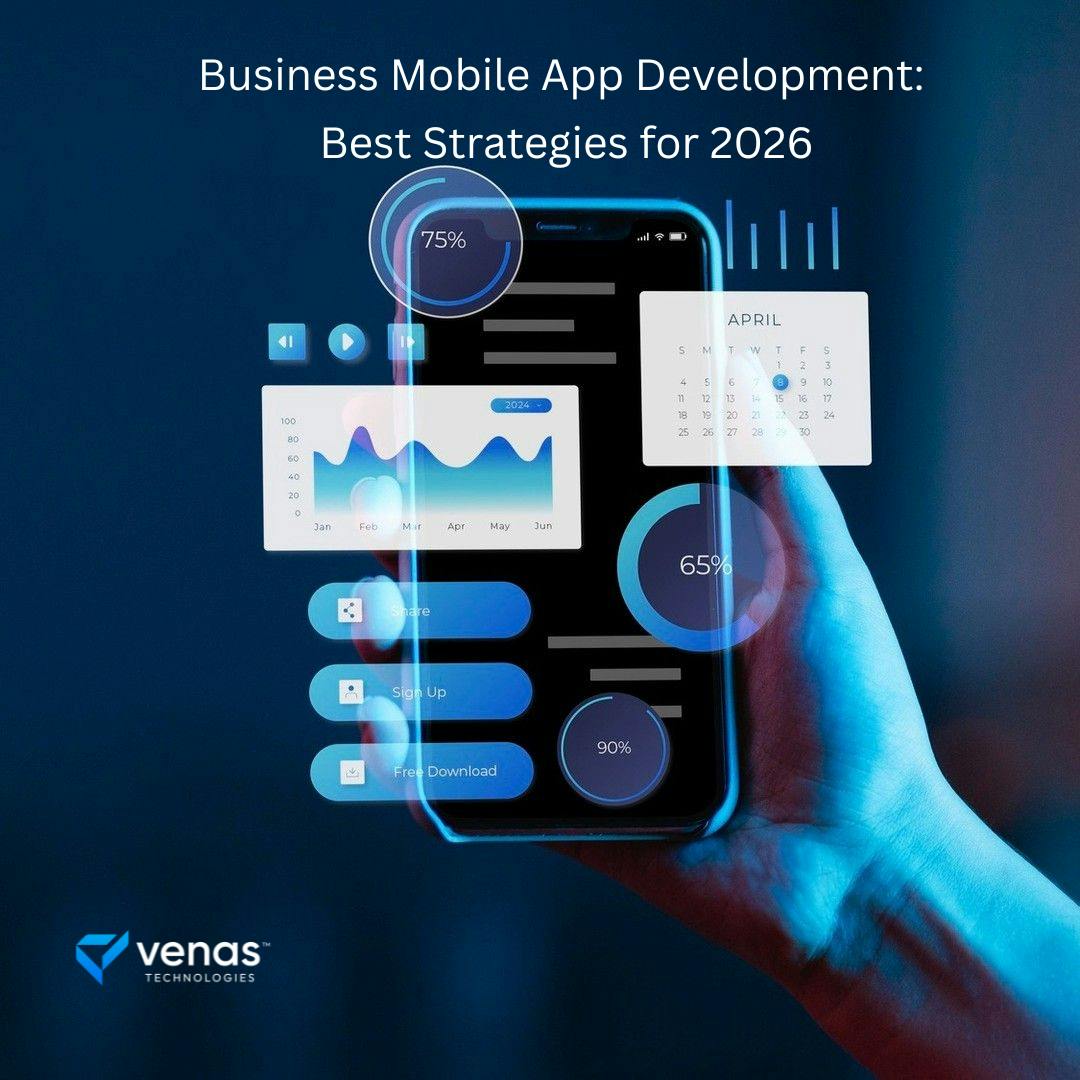
Mobile apps are one of the most powerful tools a business can invest in today. In 2026, the mobile landscape will be rapidly evolving — shaped by technologies like AI, 5G, cross-platform frameworks, immersive experiences, and security-first design. Planning your mobile app strategy with these forces in mind will determine whether your product thrives or gets left behind.
In this guide, we’ll cover the essential strategies every business should adopt in 2026, illustrated with real trends, expert insights, and actionable steps you can take right now.
Why Mobile Apps Still Matter for Business
Mobile apps continue to be a core channel for customer engagement, retention, and revenue generation. Apps help businesses:
- Offer personalized experiences that drive return visits
- Reach users with push notifications
- Integrate deeply with business systems (CRM, analytics, ERP)
- Enable real-time communication and transactions
As devices and networks advance, mobile apps are becoming indispensable for both customer-facing services and internal operations alike.
Strategic Pillars for 2026 Mobile App Success
Below are the key axes your mobile strategy should center around:
🔹 1. Make AI the Heart of Your App (AI-First Strategy)
Artificial intelligence isn’t just an add-on anymore — it’s a baseline expectation. By 2026, apps that adapt to user behavior and offer personalized experiences will dominate. These include:
- Smart recommendations
- Predictive analytics to tailor the UX
- Intelligent search and automated automation
AI can reduce churn, increase engagement, and make your app feel unique to every user.
🔹 2. Embrace Cross-Platform Development for Speed & Reach
Using frameworks like Flutter, React Native, or Kotlin Multiplatform lets you build one codebase that runs on both iOS and Android — cutting costs, time-to-market, and maintenance overhead.
Benefits Include:
- Faster rollout
- Consistent UX
- Lower development cost
- Easier updates
Cross-platform is quickly becoming the default choice for businesses that want quality without duplication of effort.
🔹 3. Prioritize Security & Privacy by Design
With rising cyber threats and regulations around data privacy, apps in 2026 must be secure from day one — not as an afterthought. This includes:
- Encrypted data storage
- Biometric authentication
- Threat detection and secure APIs
- Compliance with GDPR/CCPA and other standards
Security breaches are frequent, and reactive approaches are costly. Proactively building secure apps builds trust and protects your brand.
🔹 4. Build Super Apps and Integrated Experiences
In markets around the world, super apps are growing — single platforms that offer multiple services like messaging, payments, e-commerce, bookings, customer support, and analytics in one place.
Why this matters:
- Reduces app clutter
- Drives higher engagement and retention
- Provides omnichannel experiences
If you have multiple digital products, think about unifying them into one central ecosystem.
🔹 5. Leverage 5G, Edge Computing & On-Device AI
5G adoption continues expanding, which means:
- Ultra-fast performance and low latency
- Real-time experiences
- Smooth AR/VR and streaming content
- Intelligent processing on the device itself
Mobile apps optimized for 5G and edge AI will feel faster, smarter, and more responsive than ever.
🔹 6. Focus on UX & UI That Feels Personal
A great app isn’t just about features — it’s about feel:
- Simple navigation
- Fast load times
- Adaptive layouts
- Feedback loops
Apps with great UI/UX convert better and enjoy much lower uninstall rates. User-centric design continues to be a competitive advantage in 2026.
🔹 7. Consider Low-Code & No-Code for Rapid MVPs
If your team needs to experiment or validate ideas quickly, low-code/no-code platforms are perfect for:
- Fast prototyping
- Testing assumptions
- Speeding up internal tools
These platforms don’t replace custom solutions, but they significantly reduce time and cost for early stages.
🔹 8. Don’t Forget Backend Architecture & Scalability
A modern mobile app isn’t just front end — it needs a scalable backend:
- Cloud-native infrastructure
- Microservices
- Real-time data sync
- Serverless components
This helps apps grow smoothly as your user base grows, without costly rewrites.
Tools & Tech Stack You Should Consider in 2026
Here’s a quick practical summary of tools and technologies worth investing time — if they fit your product goals:
- Frameworks: Flutter, React Native, Kotlin Multiplatform
- Backend: AWS / Azure / Google Cloud, Serverless
- AI & ML Tools: TensorFlow Lite, ML Kit, GPT-APIs
- Security: OAuth2, JWT, encryption libraries
- DevOps: CI/CD, automated testing
- Analytics: Firebase, Mixpanel, Amplitude
For expert execution, you can partner with professional providers like Venas Technology — a team that helps businesses turn ideas into mobile products.
Real World Example: Super Apps, AI & Integration
Imagine a retail business launching a mobile app that:
✔ Uses AI to show personalized product recommendations ✔ Lets customers browse, buy, track orders, and chat with support ✔ Integrates loyalty points, payments, and delivery tracking ✔ Works seamlessly on Android and iOS
This all-in-one experience increases engagement, creates customer lifetime value, and reduces the need for multiple apps. It’s exactly what top companies are building for 2026.
Frequently Asked Questions (FAQ)
Q: What’s the most important trend for mobile apps in 2026? A: AI-powered personalization is arguably the biggest game-changer — it’s what turns a static app into a dynamic, user-centric experience.
Q: Should I build separate native apps or a cross-platform app? A: Most businesses should start with cross-platform frameworks (like Flutter or React Native) to save time and money while maintaining quality.
Q: Do I need a mobile app if I already have a responsive website? A: Yes — mobile apps deliver engagement, performance, personalization, and offline capabilities that websites alone can’t match.
Q: How critical is security in app development? A: Extremely — data breaches not only damage trust, they cost businesses financially and legally. Building security from day one is essential.
Q: Can small businesses afford mobile apps in 2026? A: Absolutely. With low-code solutions, cross-platform tools, and third-party services, even SMEs can launch effective apps without huge budgets.
Final Thoughts
Mobile apps in 2026 are more than just features — they’re strategic platforms that power growth, engagement, and competitive differentiation. Businesses that lean into AI, cross-platform development, security, performance, and user-centric design will be best positioned to thrive.
Whether you’re a startup launching your first MVP or an enterprise refining your digital ecosystem, the time to plan your mobile strategy is now.
For expert app development services, strategy guidance, and execution support, explore what Venas Technology can do for your business.
Table of Contents
Related posts
Custom Web Development
Choosing a Custom Web Development Company
Explore how a Custom Web Development Company builds scalable and high-performing solutions for your business goals

Business Technology
The Digital Advantage: Why Companies That Invest in Smart Software Win Faster

custom software solutions
The Role of a Software Company in Ethiopia in Digital Transformation and Business Growth
Subscribe to our blogs to keep informed with as about technology.